
History under attack
A major UN report into Holocaust distortion and denial on social media
Holocaust denial and distortion is nurtured and sustained by social media.
Paul Salmons was deeply involved in the conceptualisation, development and drafting of History under attack: Holocaust denial and distortion on social media, which was published by the United Nation’s Department for Global Communications and UNESCO, in partnership with the World Jewish Congress.
This major report is a data-driven investigation into the extent and nature of Holocaust denial and contemporary social media websites, developed under the supervision of Karel Fracapane and coordinated by Heather Mann with detailed data research by the Oxford Internet Institute at the University of Oxford.
Level of denial or distortion of facts about the Holocaust on social media websites.
49%
Telegram
15%
Twitter / X
10%
The report found:
widespread denial and distortion across mainstream social media, not just fringe websites
denial has evolved into more subtle and shareable forms, including coded language, glorification of Nazi ideology and memes, jokes and minimisation of the facts
platform moderation and Holocaust education both make a measurable difference.
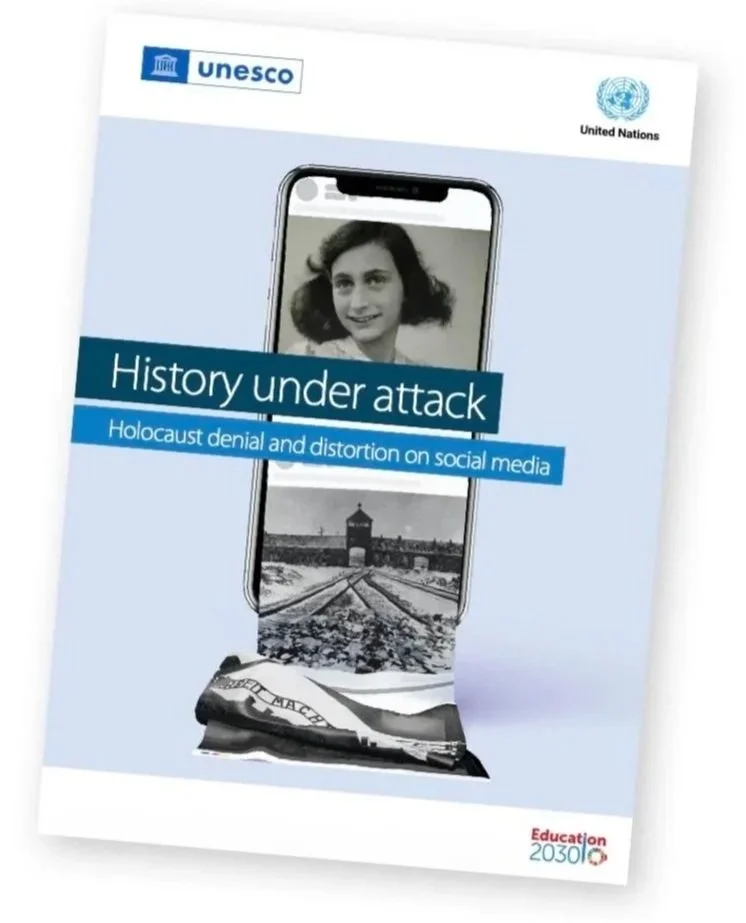
History under attack: Holocaust denial and distortion on social media is to download for free or read online.
Understanding the history of the Holocaust is crucial to safeguarding our future. This is particularly crucial as we see some seeking to rewrite history or to whitewash and rehabilitate those who committed crimes against humanity. This report is an urgent wake-up call that must jolt us into action – to pursue truth, remembrance, and education, and together build a world of peace, dignity and justice for all.
— Antonio Guterres, Secretary-General, United Nations
Denial and distortion – from the ‘Ideas’ section
A leading expert on Holocaust denial and distortion, Paul and has written, and participated in several online discussions, about this vital topic.

Why do people believe in conspiracy theories? How do we explain their hold on the public imagination, and what do they tell us about ourselves? Join an international panel of experts providing insights from history, literature, psychology and cognitive science.