
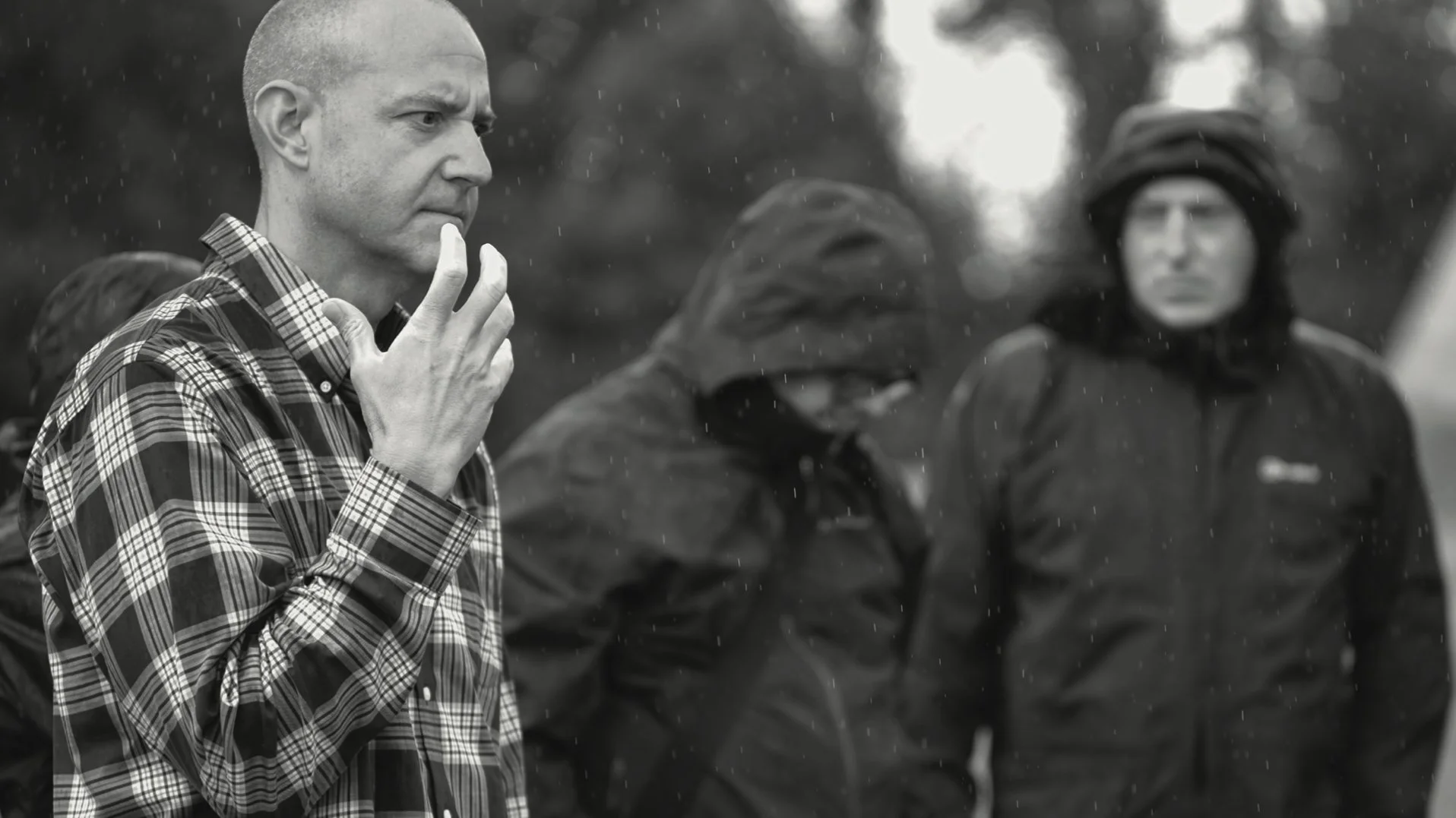
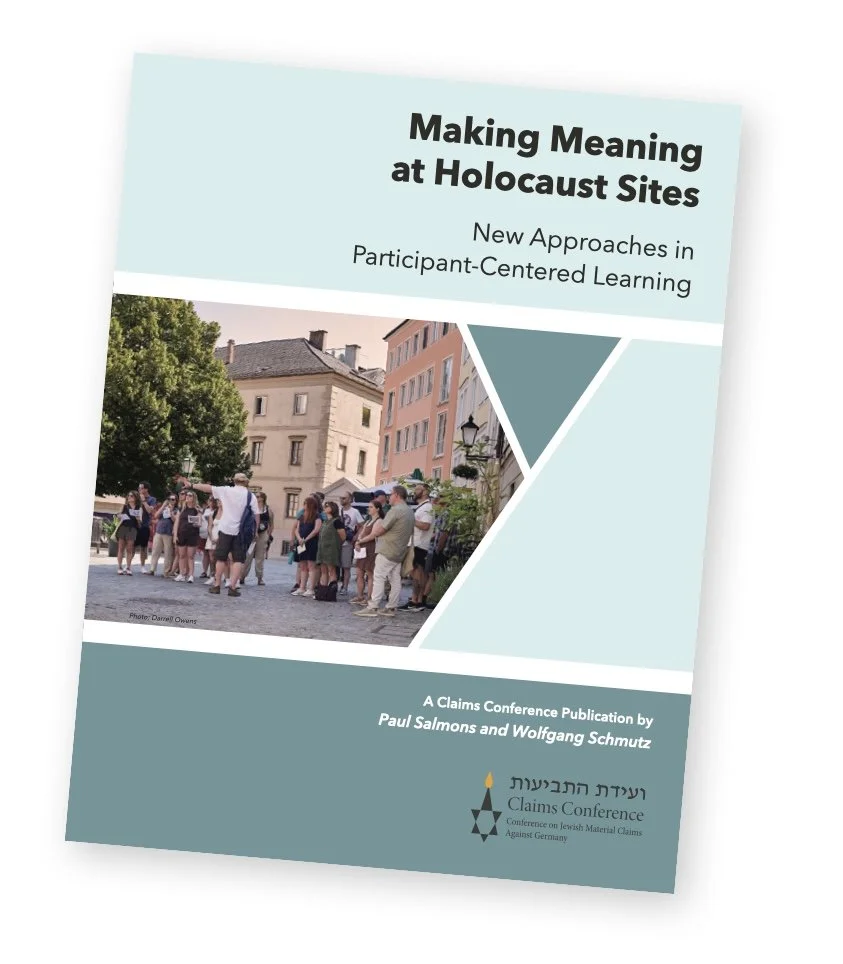
Making meaning at Holocaust sites
Supporting richer and deeper engagement through participant-centred learning.
This important new publication from Claims Conference proposes a fundamental rethink of guided learning.
Co-authored by Paul Salmons and Wolfgang Schmutz, Making Meaning at Holocaust Sites: New Approaches in Participant-Centred Learning shows how learning becomes more powerful when educators stop acting as expert narrators and instead serve as facilitators, supporting participants to investigate evidence, ask questions and construct meaning for themselves.
Participants, not guides, are the centre of the experience. The educators still use historical sites, archival photograhys, testimonies and carefully structured questions to guide the process, but the goal is to enable learners to reach their own evidence-based understanding of the challenging history of the Holocaust. This leads to much more profound and engaged learning that enables a much more searching and personal understanding.
A practical approach to enabling deeper, more lasting learning
Beyond educational theory, the handbook provides a structured framework, covering observation, historical materials, questioning, narration and imagination, alongside detailed case studies and recommendations that institutions can adopt in their own programmes.
Participants who take part in this process tend to retain more when they actively test assumptions against historical evidence, discuss difficult issues with others, and take ownership of the meaning they create, rather than simply absorbing information from an expert.
Making Meaning at Holocaust Sites: New Approaches in Participant-Centred Learning is freely available to read or download.
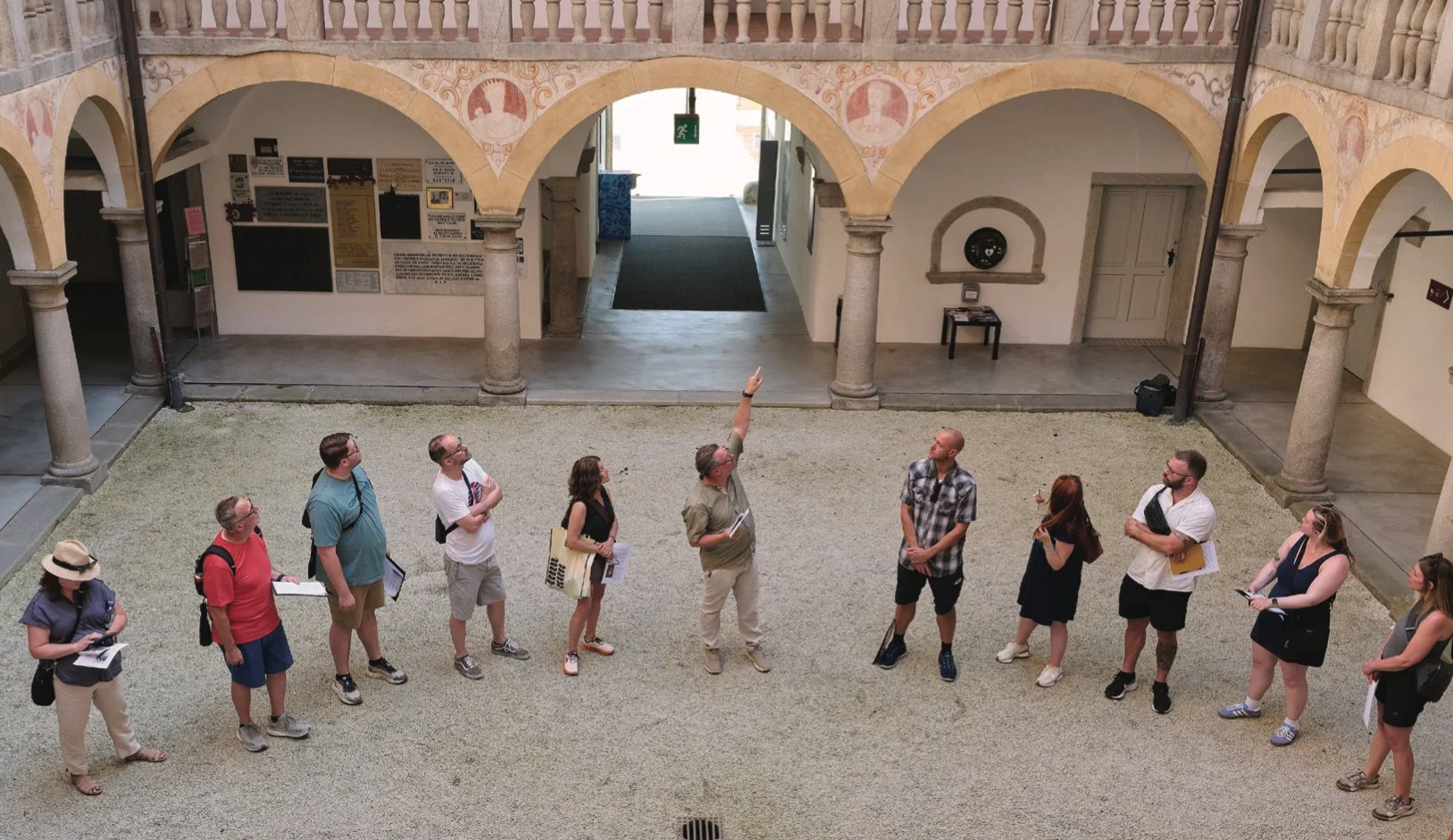
Images: Darrel Owens
‘Our approach to participant-centered learning allows and enables learners to discover their own meanings from an encounter with the Holocaust, ‘owning’ those meanings, rather than ‘borrowing’ them from the guide.’
— Paul Salmons and Wolfgang Schmutz
Participant centred learning – from the ‘Ideas’ section
A leading expert on Holocaust denial and distortion, Paul and has written, and participated in several online discussions, about this vital topic.

Our idea of the past is often shaped by a few iconic images. Paul Salmons, lead author of the International Holocaust Remembrance Alliance’s manual How to Teach about the Holocaust, explores how we can “read” photographs, to see what they reveal—and what they hide or distort.